

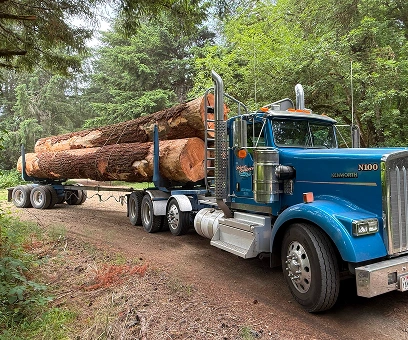
Why Western Oregon's Wet Season Is a Category of Its Own
Log truck operations in Oregon are difficult during the rainy season for various reasons. The western side of the Cascades gets heavy. The Willamette Valley and Coast Range see consistent rainfall from October through April. Some areas receive over 100 inches annually. That kind of precipitation doesn't just make roads slick. It changes the ground itself. Forest access roads, which are already narrow and unpaved in many areas, become soft and unstable. Runoff undercuts road edges. Drainage systems get overwhelmed. What was a manageable route in September can become a genuine hazard by November. For drivers running heavy haul logging trucks through these conditions, the margin for error shrinks. A load that's fine on dry ground becomes a risk when the road surface shifts underneath it.Timber Transportation in Oregon: What the Wet Season Changes
Timber transportation involves a lot of moving parts under normal conditions. Add wet weather, and those parts get harder to manage. Here's what changes when the rains come in:- Road surface stability: Unpaved forest roads absorb moisture and lose firmness. Even properly maintained access roads can develop soft shoulders and rutting that make wide, heavy vehicles harder to control.
- Load securement: Wet logs are heavier and more prone to shifting. Bark-on timber can become slippery during loading, increasing the risk of uneven stacking and load movement during transit.
- Braking distance: Fully loaded log trucks can weigh close to 100,000 pounds. On wet pavement or muddy forest roads, stopping distances increase significantly.
- Visibility: Heavy rain reduces sightlines on mountain roads. That matters most in areas with sharp curves, no guardrails, and steep drop-offs. The logging roads of Western Oregon have all three.
- Equipment wear: Wet conditions accelerate wear on tires, brakes, and undercarriage components. A carrier that doesn't maintain its fleet aggressively through winter will start seeing failures during the worst possible time of year.
Wet Season Trucking Challenges That Go Beyond the Road
Wet season trucking challenges extend beyond what happens on the route. They extend into scheduling, compliance, and communication.- Mills run on tight timelines. When weather delays a haul, that delay ripples downstream. Schedules slip. Processing queues back up. The pressure to push through poor conditions instead of waiting for safer windows becomes real. That's when shortcuts happen, and shortcuts in this industry cost people.
- Permit management also becomes more complicated. Some routes require additional approvals in the winter months due to weight restrictions on soft road surfaces. Oregon DOT and county roads have seasonal load limits that carriers must track and respect.
- Then there's communication. When a haul is running late due to weather, the client needs to know. Silence creates problems. Transparent updates, even when the news isn't good, keep operations running with less friction.
What Safe Operations Look Like in Wet Conditions
Safe heavy equipment hauling through a western Oregon winter requires a specific approach, not general best practices borrowed from dry-weather freight. The carriers who do it well share a few things in common.- They inspect equipment before every haul. Pre-trip inspections aren't optional in any season, but in winter they become more critical. Brakes, tires, lighting, load binders, chains, and tarps all need to be checked before a truck leaves the yard.
- They train drivers for the specific conditions they'll face. That means understanding how loaded weight behaves on downhill grades in rain, how to read road surfaces, and when to stop and wait rather than push through.
- They plan routes around current conditions, not just maps. A route that works on paper might have a compromised section that morning. Good carriers get that information before the driver is already committed.
- They maintain their fleets through the season, not just at the start of it. Winter is hard on equipment. Scheduled maintenance needs to continue even when demand is high.
Timber Transportation: How Morris O. Nelson & Sons Handles It
Timber transportation in Oregon during the wet season is exactly the kind of work Morris O. Nelson & Sons was built for. The company has been operating out of Springfield, Oregon, since 1967. That's nearly six decades of running loads through western Oregon winters.- The fleet is purpose-built for log truck operations in Oregon. Log trucks are licensed from 80,000 to 99,500 lbs. Heavy-haul trailers run up to 12 axles. Flatbed options cover processed lumber and large forestry materials.
- Drivers are trained specifically for the demands of this work, including the seasonal challenges that come with western Oregon's wet months. Load securement protocols are built into every haul, not reviewed after something goes wrong.
- Permit compliance is handled in-house. Wet weather freight safety during the wet season often requires route-specific planning that accounts for seasonal weight restrictions and road conditions. Morris O. Nelson & Sons manages that process, so the client doesn't have to.